Analytics & AI / Smart Mobility / IoT

Smart Bus: Real-Time Occupancy Monitoring
Urban bus operators struggle with unpredictable passenger loads, route delays and lack of live occupancy data-leading to overcrowding at peak times and poor rider satisfaction.

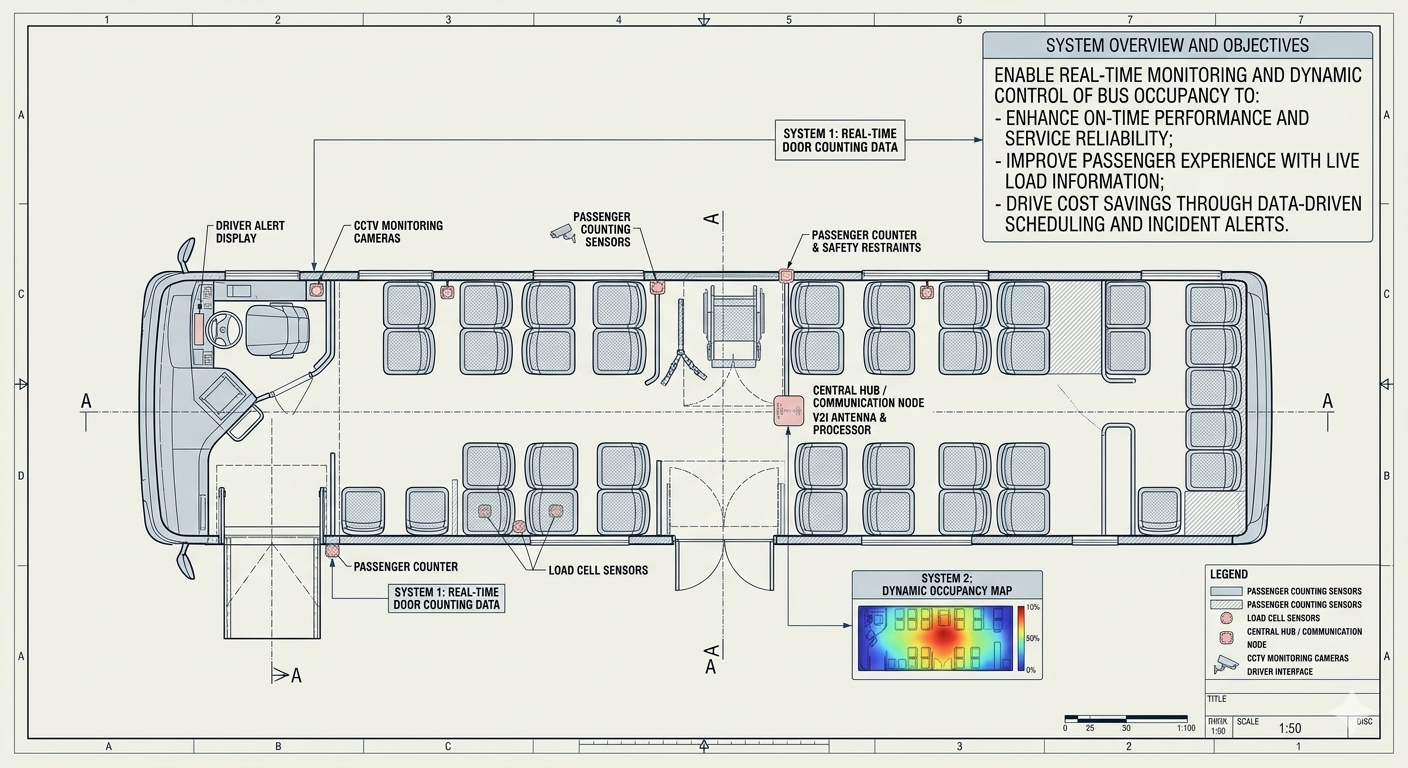
Blueprint of a bus scanned with computer vision and analyzed using AI

Objective

Enable real-time monitoring and dynamic control of bus occupancy to:

    • Enhance on-time performance and service reliability.
    • Improve passenger experience with live load information.
    • Drive cost savings through data-driven scheduling and incident alerts.

Solution Adopted

AIntelligence Research deployed a fully integrated IoT and AI ecosystem, featuring:

    • AI-powered cameras onboard each bus for per-stop passenger counting.
    • Automatic Vehicle Location (AVL) via GPS for live tracking.
    • Passenger Information System (PIS) for real-time journey updates.
    • Central operations dashboard for occupancy trends, alerts and decision support.
    • Central control-room dashboard with automated incident notifications.

Key Actions

    • Deployed and calibrated two AI cameras per vehicle, achieving > 98% head-count accuracy.
    • Integrated GPS feeds into a streaming pipeline for sub-5-second location updates.
    • Configured the onboard unit to merge PIS, AVL and camera data, forwarding events to the control center.
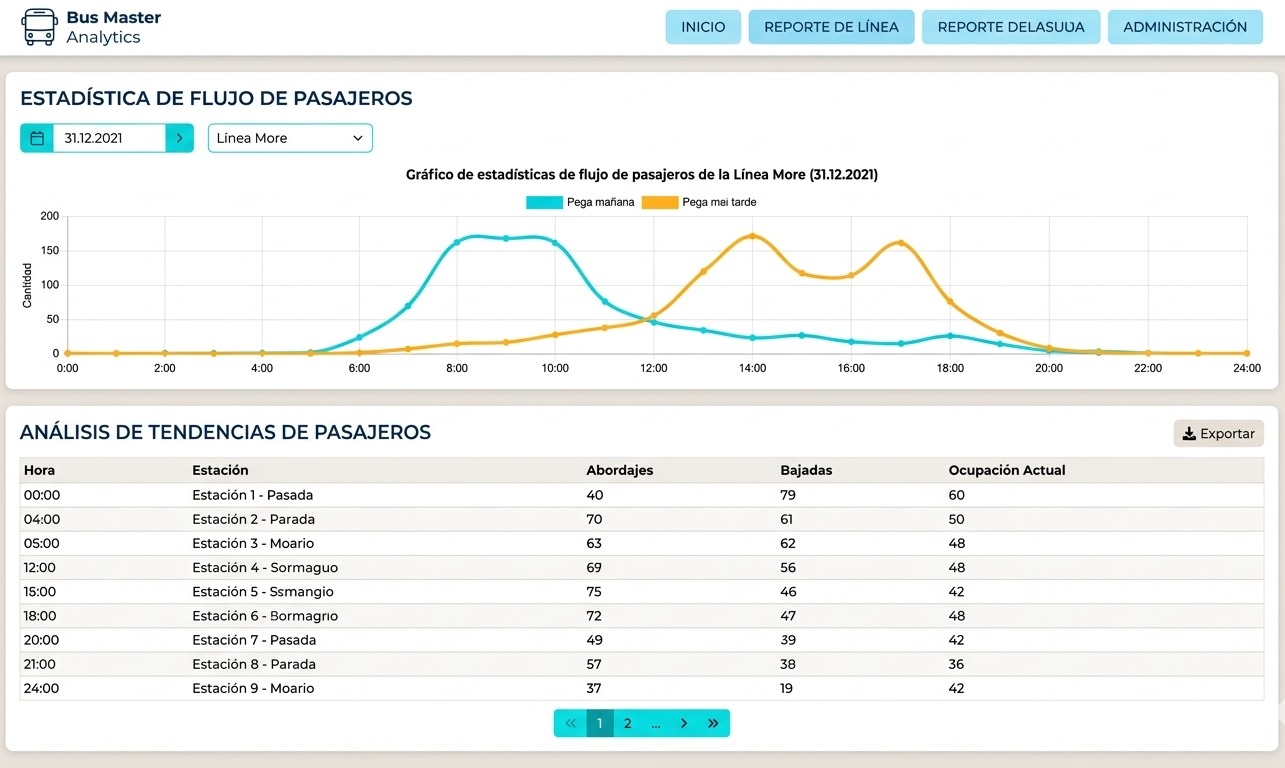
    • Developed a web-based dashboard showing live occupancy heatmaps, trend graphs and incident notifications.
    • Rolled out a mobile app and station-side displays for passenger load alerts and expected arrival times.
    • Established automated alerts (SMS/email) for breakdowns, driver absences or overcrowding.

Technologies

    • Computer Vision: YOLOv5 on edge devices, OpenCV.
    • Streaming & Storage: Apache Kafka, PostgreSQL.
    • Cloud Platform: AWS IoT Core, Lambda, S3.
    • Frontend: React, Grafana.
    • DevOps: Docker, Kubernetes, Terraform.

Savings & Benefits

    • 98%+ accuracy in real-time passenger counts.
    • 20% reduction in peak-time overcrowding.
    • 15% improvement in on-time arrivals.
    • 30% fewer service-related complaints.
    • Faster response to incidents through automated operational alerts.
    • Data-driven route optimization leading to material cost savings.
A chart showing bus passenger traffic, based on data collected through AIntelligence’s computer vision solution